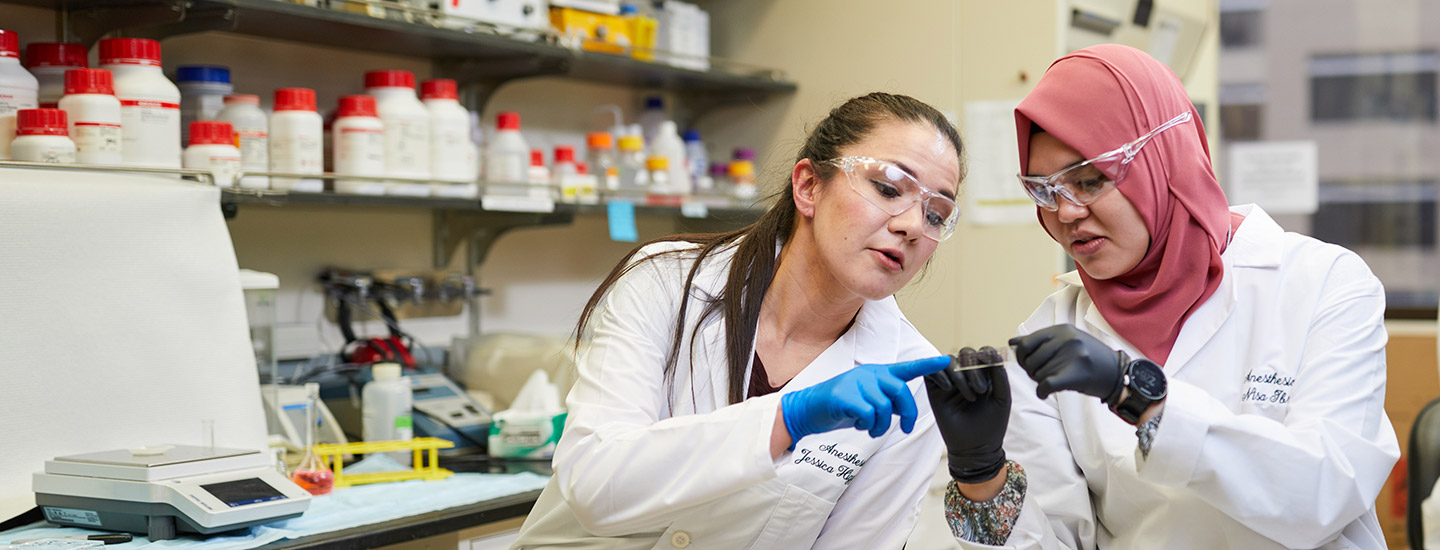
A global force in
Research
At the forefront of innovative, cutting-edge
knowledge in both lab-based and clinical research.
Welcome to the Department of Anesthesiology
The Department of Anesthesiology at Washington University School of Medicine in St. Louis is one of the most successful and innovative anesthesiology programs in the U.S. We have a long and rich history of excellence in the multi-faceted missions of collaborative patient care, education, and research.

2023 Highlights & Accomplishments
We are proud to share a brief overview of our accomplishments and highlight
the breadth and depth of these achievements across our quadripartite missions.
Latest News
Introducing the 2024 ASSURE Fellows: Meet the Rising Stars in Biomedical Research (Links to an external site)
Six department faculty honored with 2024 Dean’s Impact Awards

Reducing Carbon Footprint in Pediatric Anesthesiology: The Greenhouse Gas Project

Train here,
thrive anywhere.®
Our training programs prepare tomorrow’s leaders in clinical and academic medicine. Trainees thrive in a challenging environment fueled by a spirit of camaraderie and our shared determination to improve patient care.



Groundbreaking Research
The department is heavily funded by grants from the National Institutes of Health and has ranked among the top five anesthesiology departments in NIH dollars for over 15 years.
Committed to providing exceptional patient care
We work collaboratively with our partners at Washington University School of Medicine and the nationally ranked Barnes-Jewish Hospital system to continuously improve the health and well-being of the people in our community. We take pride in being leaders in the rapidly-advancing field of anesthesiology – encompassing perioperative medicine, peripartum and critical care, and pain management.
Featured Anesthesiology Department Members
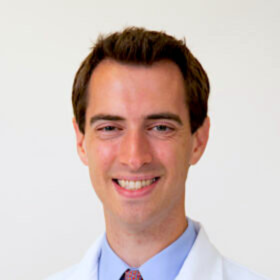
Nathan Achilly, MD, PhD
Resident, Class of 2026

Kelsey Arends, MBA
Marketing & Communications Specialist
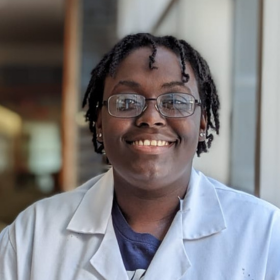
Bobbie Brown
DBBS Pre Doc Trainee
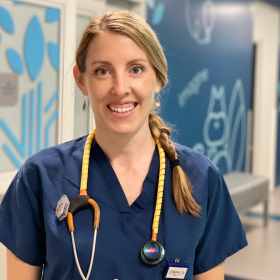
Katy Spal, CRNA
Certified Registered Nurse Anesthetist
Department Updates on Coronavirus (COVID-19)
Our department is closely monitoring the spread of coronavirus (COVID-19). See the latest departmental updates and resources on the coronavirus page.

Why we love St. Louis
Here you’ll find charming neighborhoods, vibrant cultural and culinary scenes, and plenty of fun for nature-lovers and urbanites alike – all packed into an incredibly affordable city.